Ceiling Water Damage and Roof Leaks in Northern New Jersey
If water is coming through your ceiling, stay out from under it and call PDQ Restoration. We open the ceiling safely, remove wet insulation, dry the framing and rebuild it, whether the water came from a roof leak, an ice dam or a pipe. This is part of our water damage restoration service for Northern New Jersey.
Ceiling sagging or dripping right now? Stay out from under it and call.
Call 973-447-3363What should I do right now if water is coming through the ceiling?
Get people out from under it, stop the water if it is plumbing, and call. Do these 5 things now:
- Stay out from under a sagging ceiling. Wet drywall is heavy and can fall.
- Shut off the water if a bathroom or pipe is above the leak.
- Keep away from wet light fixtures and turn off that circuit at the breaker.
- Take photos and video, then put down a bucket and a tarp.
- Call PDQ at 973-447-3363. Report the claim with us, not before us.
What is the water stain on my ceiling telling me?
The shape of the damage tells you how urgent it is.
Where is the water in my ceiling coming from?
Look at what is directly above the stain.
| What is above | Most likely source |
|---|---|
| A bathroom | Toilet, tub, shower or supply line |
| A kitchen or laundry | Appliance or drain line |
| A pipe run | Burst or leaking pipe |
| The attic | Roof leak, ice dam or air conditioning drain |
| A skylight or chimney | Flashing |
The source is repaired by the appropriate licensed trade: a plumber, a roofer or an HVAC contractor. We handle the water it left behind.
What causes a roof leak?
Most roof leaks start at an opening or an edge, not in the middle of the shingles: flashing, vent pipes, skylights, valleys and gutters. Wind and storm damage cause the rest. Roof leaks and ice dams together start about 1 in 9 of our water damage jobs.
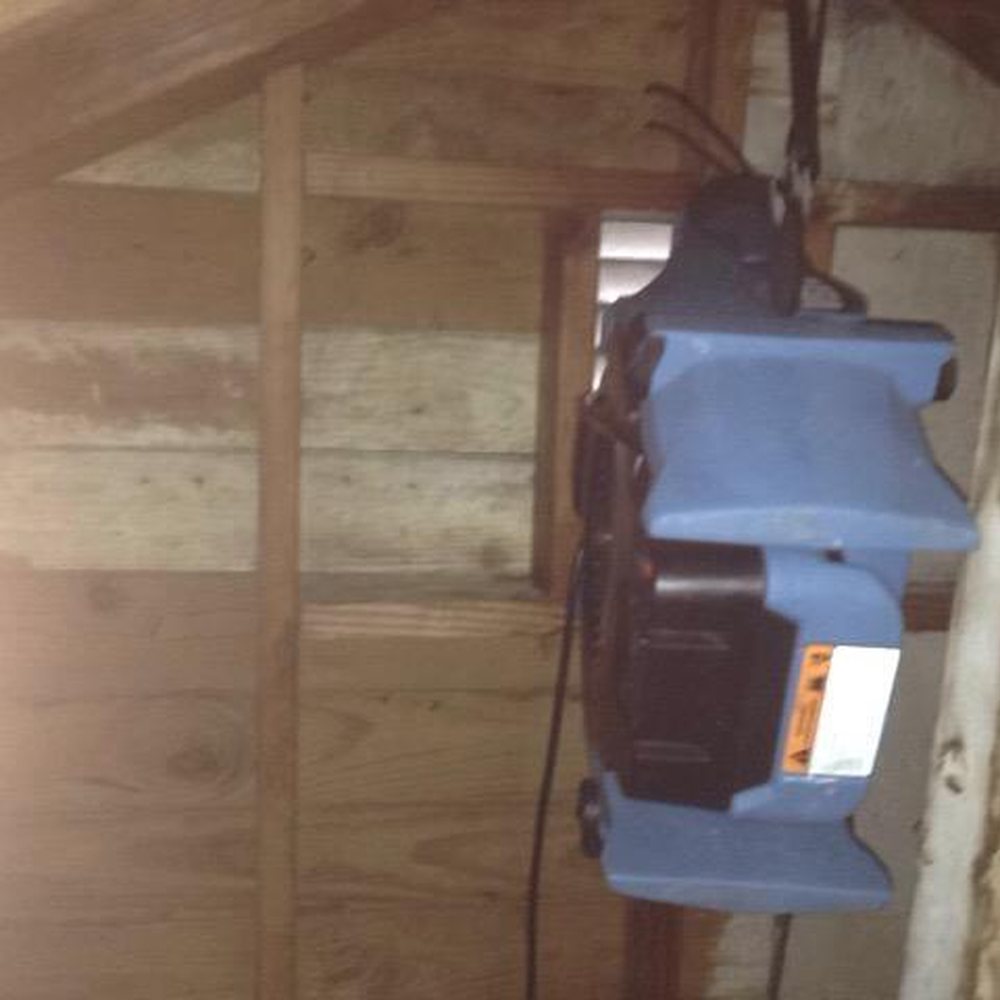
How do I know it is the roof and not plumbing?
- It shows up during or right after rain, wind or melting snow
- It is on the top floor, with only the attic above
- It is near a chimney, a skylight or an outside wall
- The stain grows with each storm, then dries out between them
What happens after a roof leak
- A roofer covers and repairs the roof. A tarp keeps the next rain out.
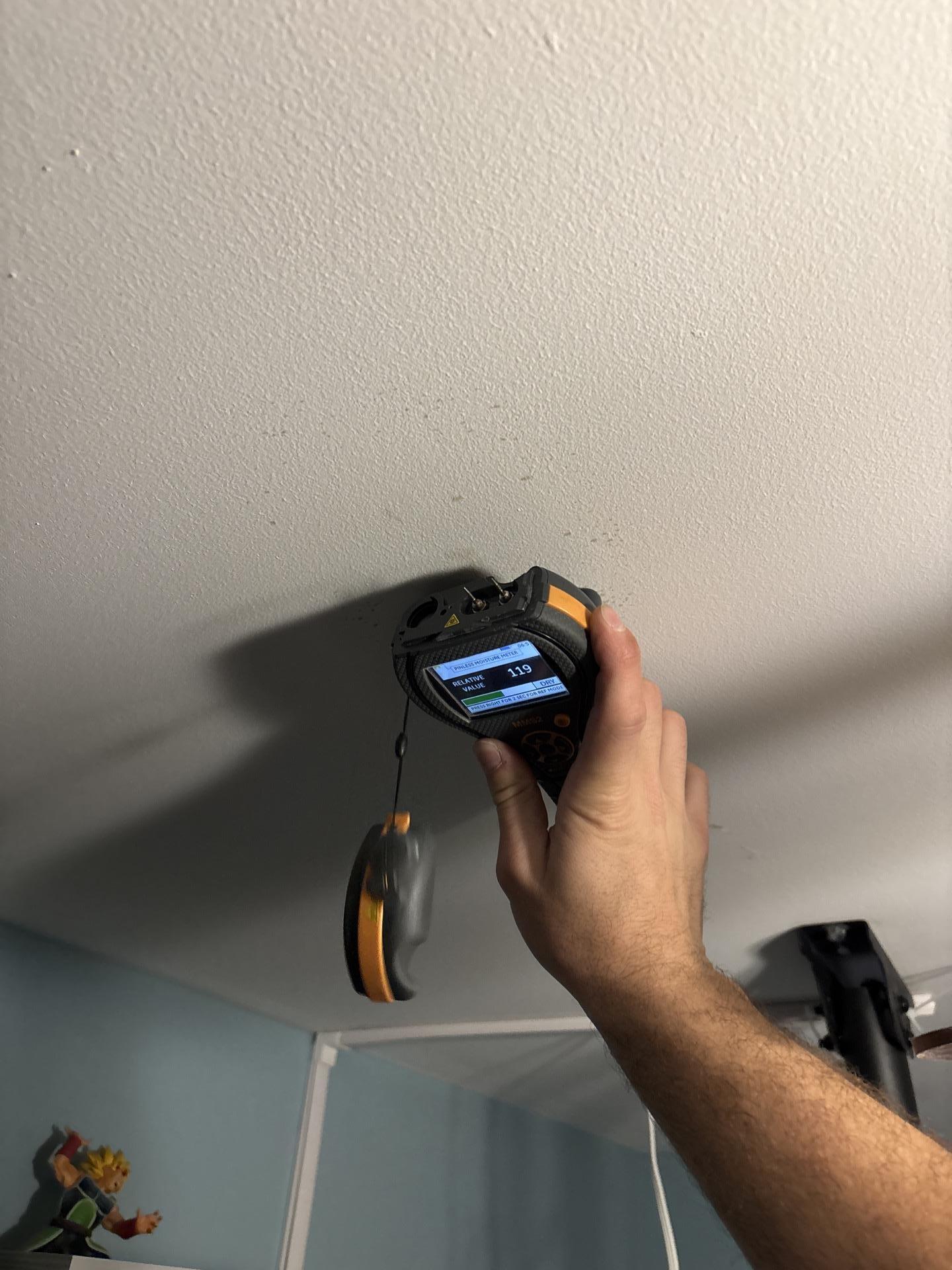
- PDQ checks the attic. Wet insulation and roof decking are found with a moisture meter.
- Wet insulation comes out and the framing is dried.
- The ceiling below is opened, dried and rebuilt.
A real roof leak job from our files
Rain through an uncovered roof
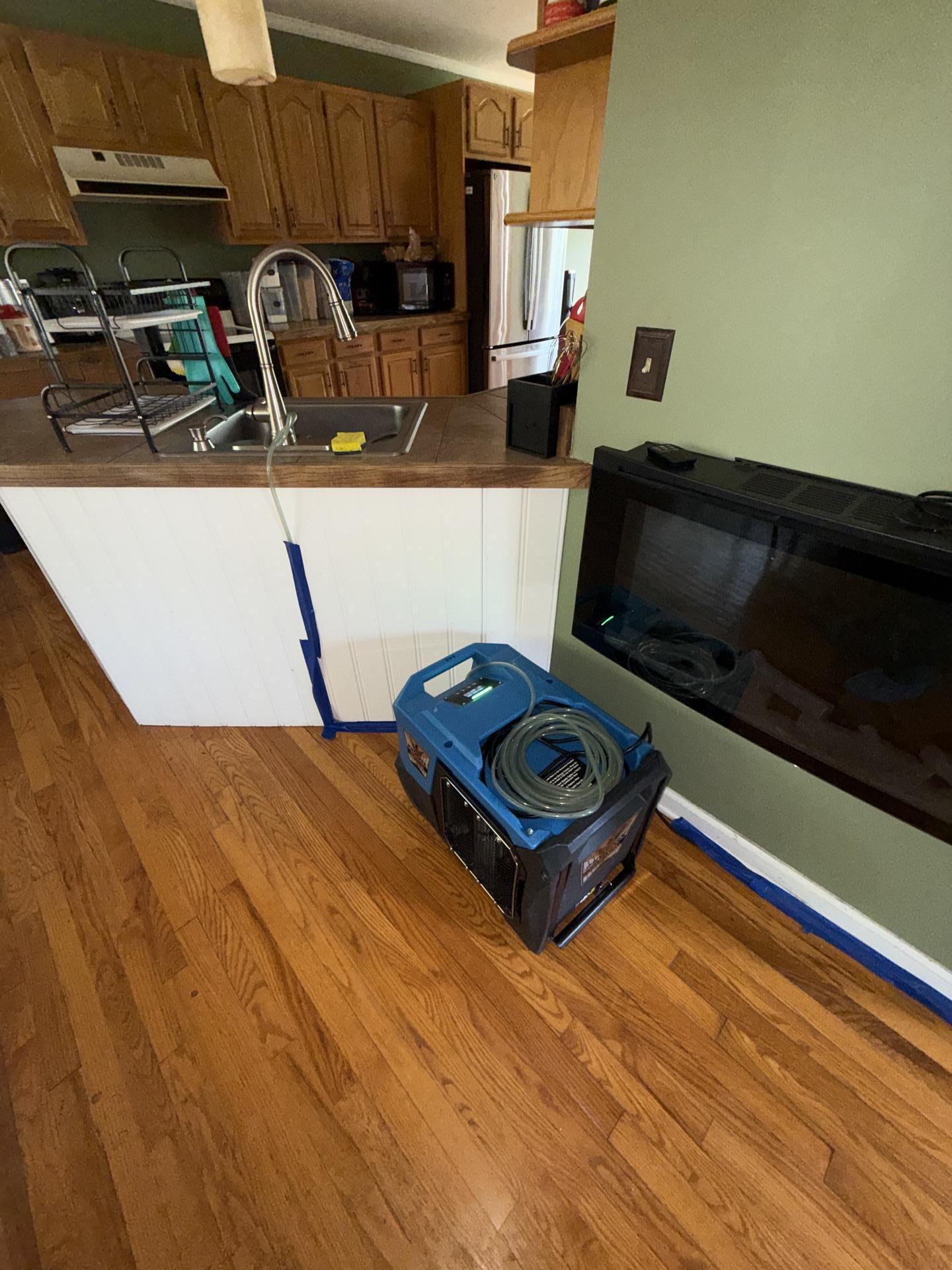
A tarp had been left off the house and it rained. The homeowner found the water at 9 a.m. and we were on site within 45 minutes.
- On site in 45 minutes
- About 40 air movers
- 15 dehumidifiers
- About 9 days to dry
How do ice dams cause ceiling leaks?
An ice dam forms when snow melts on the warm part of the roof and refreezes at the cold edge, so the water behind it backs up under the shingles. It only happens in the right conditions: about 6 to 8 inches of snow that stays cold for days. It is a small share of our jobs, but when the conditions line up, the calls come all at once.
Ice dam leaks show up at the edges of the ceiling, along the outside walls and at the seams. You will not see them in the middle of the house. The water backs up under the gutter line and sits on top of the outside corners of the room. Most of our other ceiling leaks are in the middle of the ceiling, in a kitchen or a bedroom with a bathroom above it. Either way, the source has to be confirmed first.
How do I prevent ice dams?
- Keep the roof cold. A well insulated attic stops heat from melting the snow
- Add attic vents so warm, humid air does not collect under the roof deck
- Check attic ductwork for leaks that send warm air into the attic
- Ask a roofer about an ice and water shield under the shingles at the roof edge
- Use a roof rake to pull snow off the edge after a storm
Who removes an ice dam?
A roofing company does, and PDQ can recommend one. PDQ does not remove ice dams. We work with a roofing company that does, so the ice dam can come off the roof while we dry the inside of the house at the same time. It works the same way as a plumber and PDQ on a burst pipe.
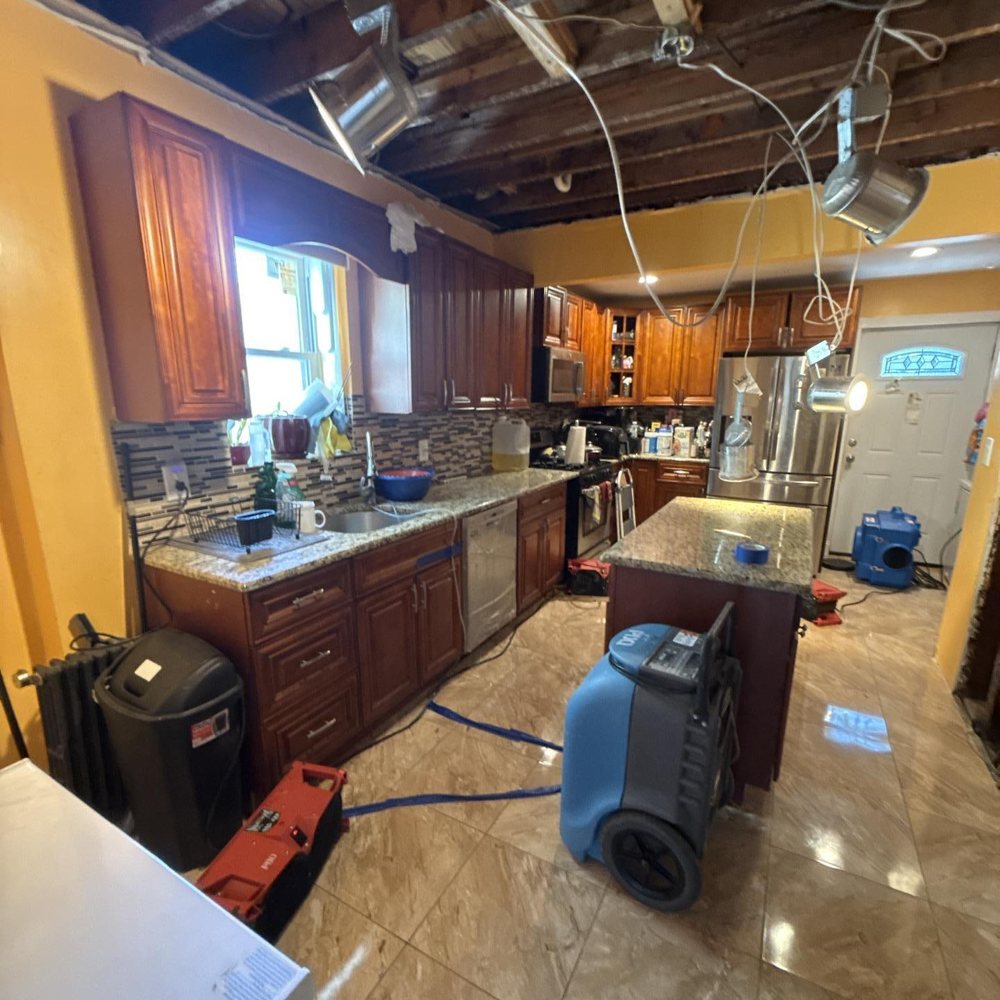
How is ceiling water damage repaired?
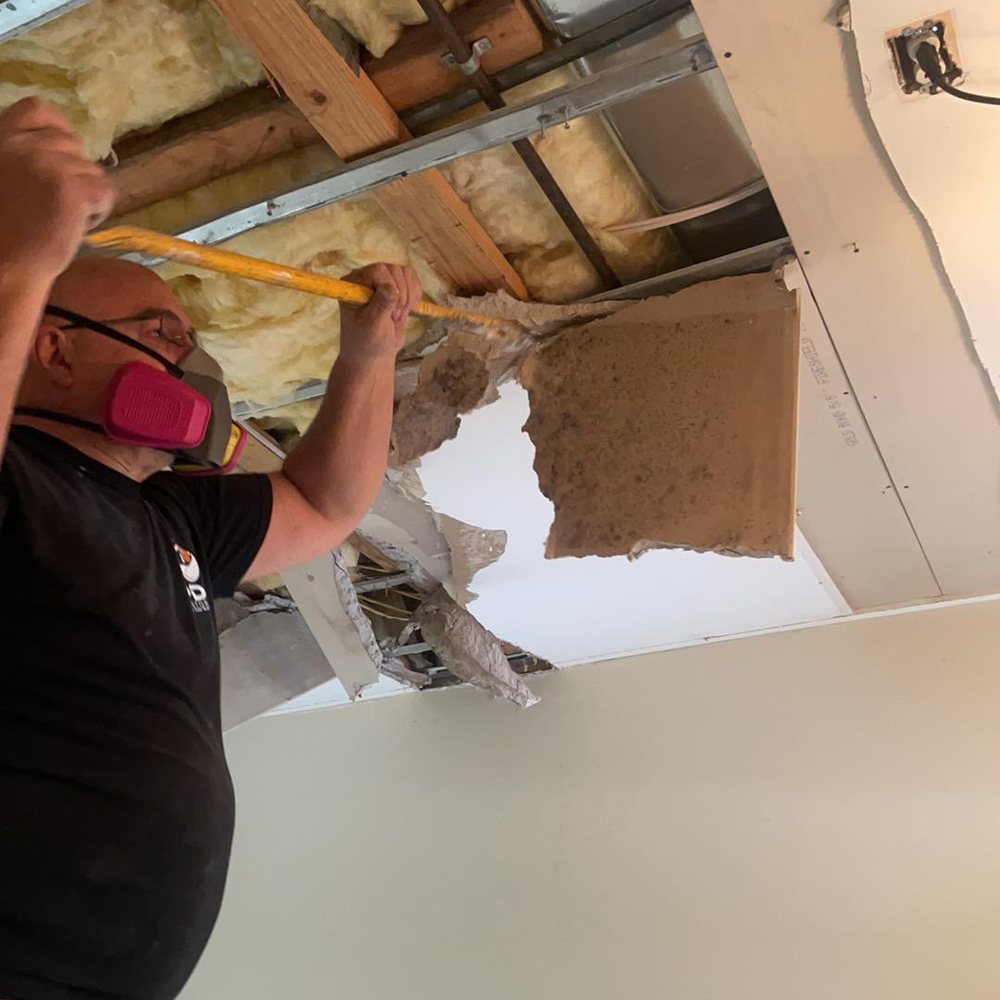
The ceiling is opened, the wet insulation comes out, the framing is dried, and then the ceiling is rebuilt.
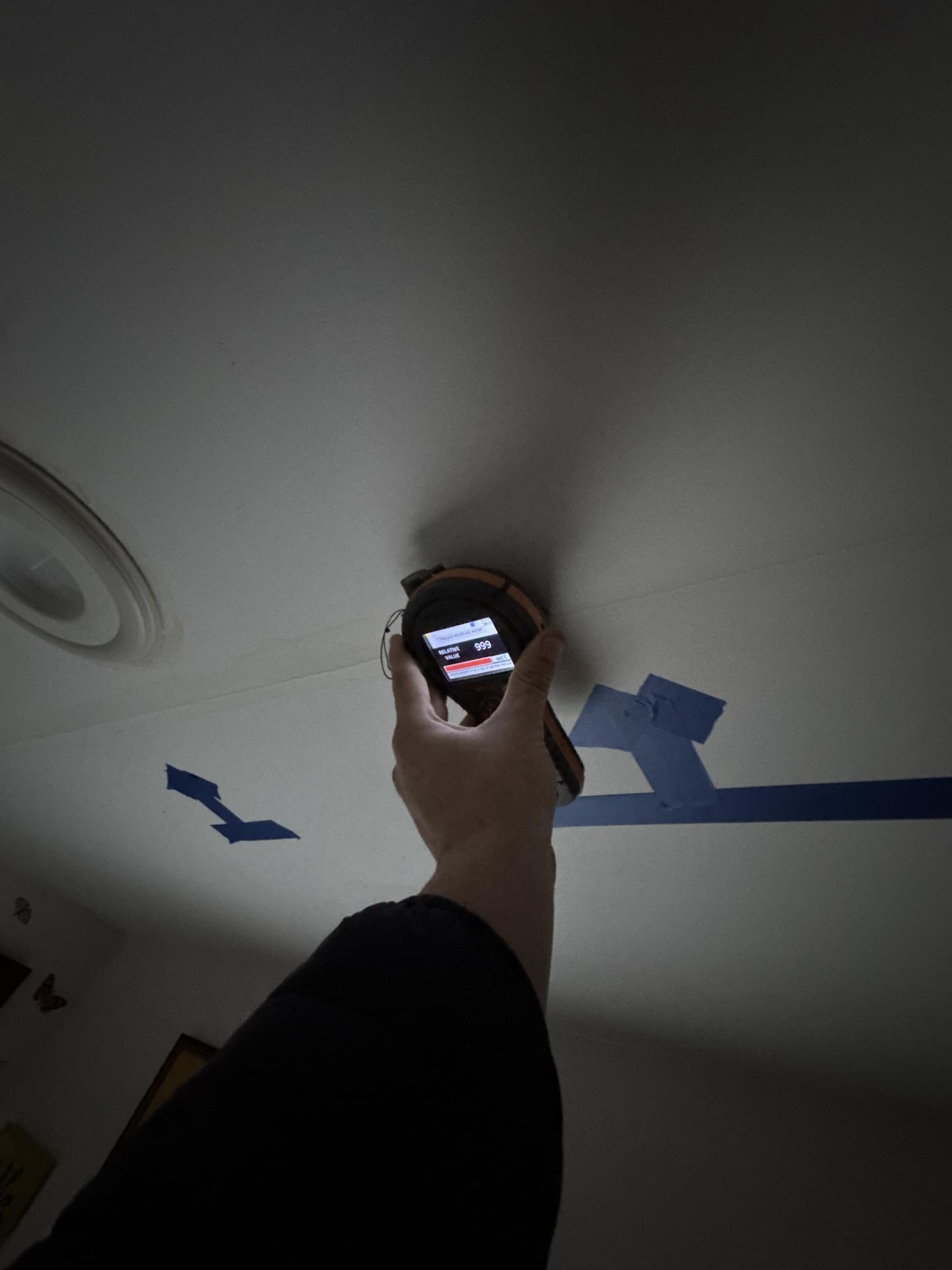
- Moisture mapping of the ceiling, the walls below it and the floor.
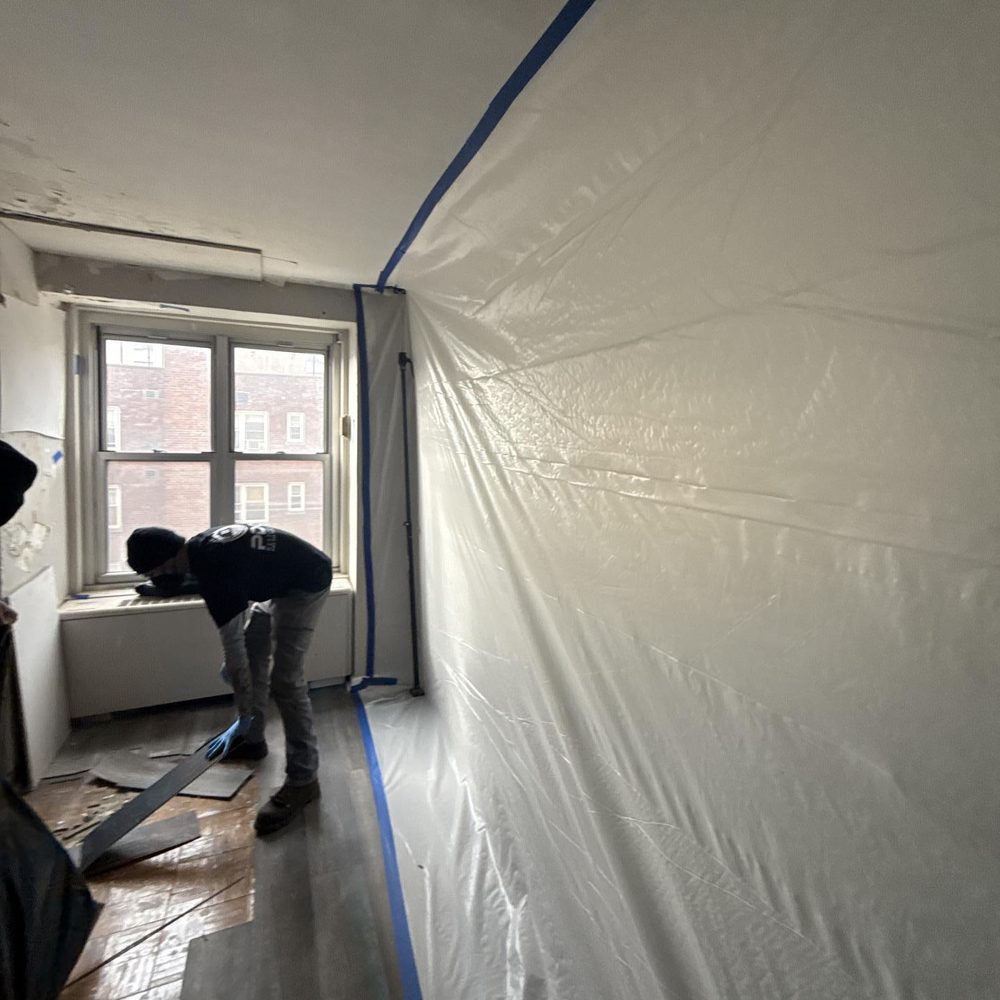
- Controlled opening of the wet section so it does not fall.
- Wet insulation removed. It does not dry in place.
- Framing and subfloor dried with daily readings.
- Rebuild: insulation, drywall, texture and paint.
Does homeowners insurance cover ceiling water damage and roof leaks?
Sudden damage from a pipe or appliance above the ceiling is commonly covered. Roof leaks and ice dams depend on the policy and on the cause. Report it as soon as you find it. We cannot promise what your carrier will cover, but we document what we find on day one.
You pay your deductible
We bill your insurance company directly at pre-negotiated pricing. On a covered loss you pay only your deductible.
Priced from the scope of your job
Self-pay pricing starts from Xactimate, the pricing system insurance companies use, and is then adjusted for the homeowner.
More detail: water damage insurance claims and water damage restoration cost in NJ.
A real ceiling leak job from our files
Fish tank leak through a hardwood floor
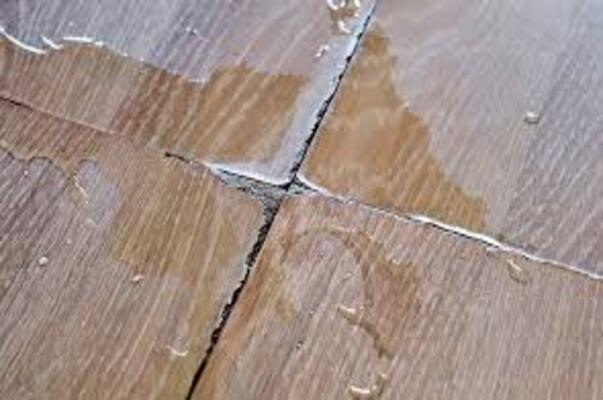
A fish tank dumped its water on the floor above. The water ran through the gaps in the hardwood, then through the gaps in the subfloor, and showed up on the ceiling of the room below.
- Source: fish tank
- Hardwood, subfloor, ceiling
Recent PDQ ceiling jobs:
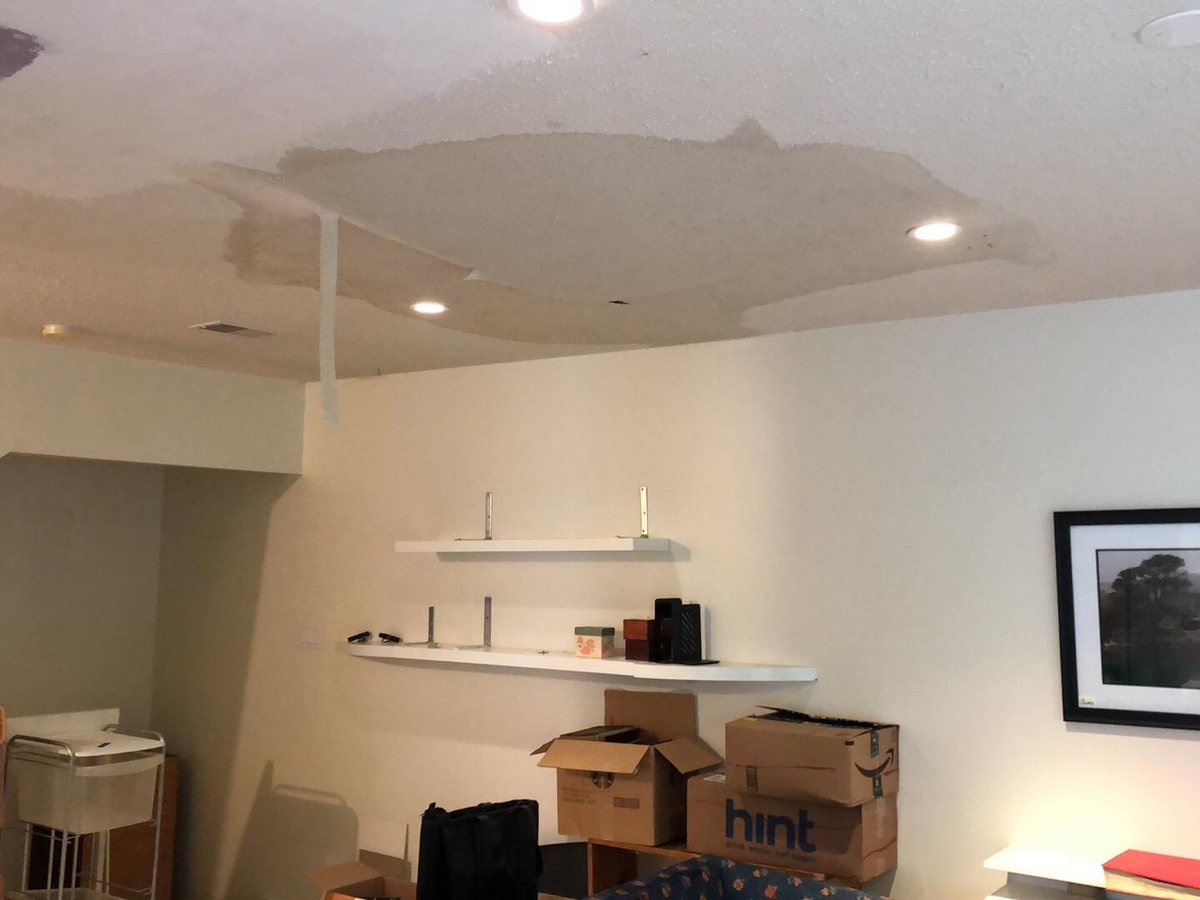
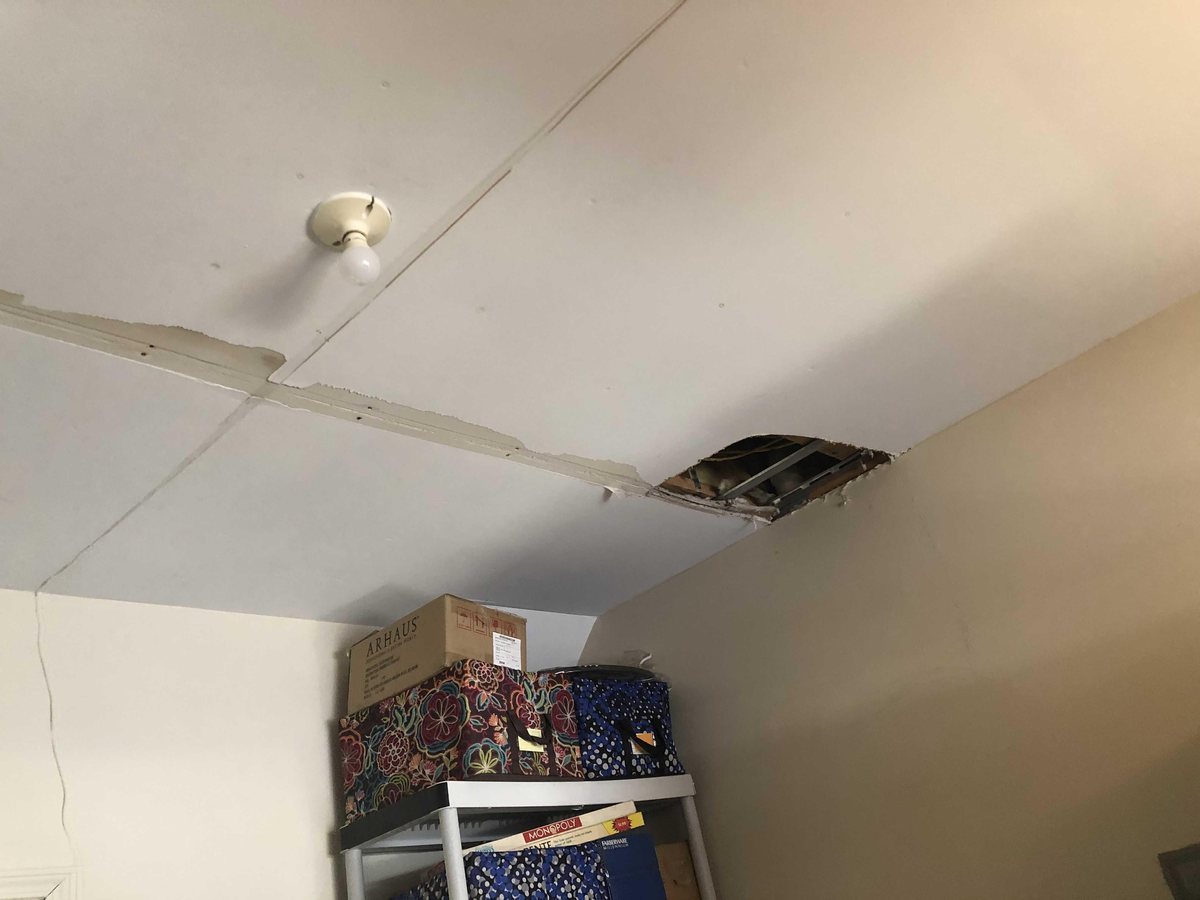
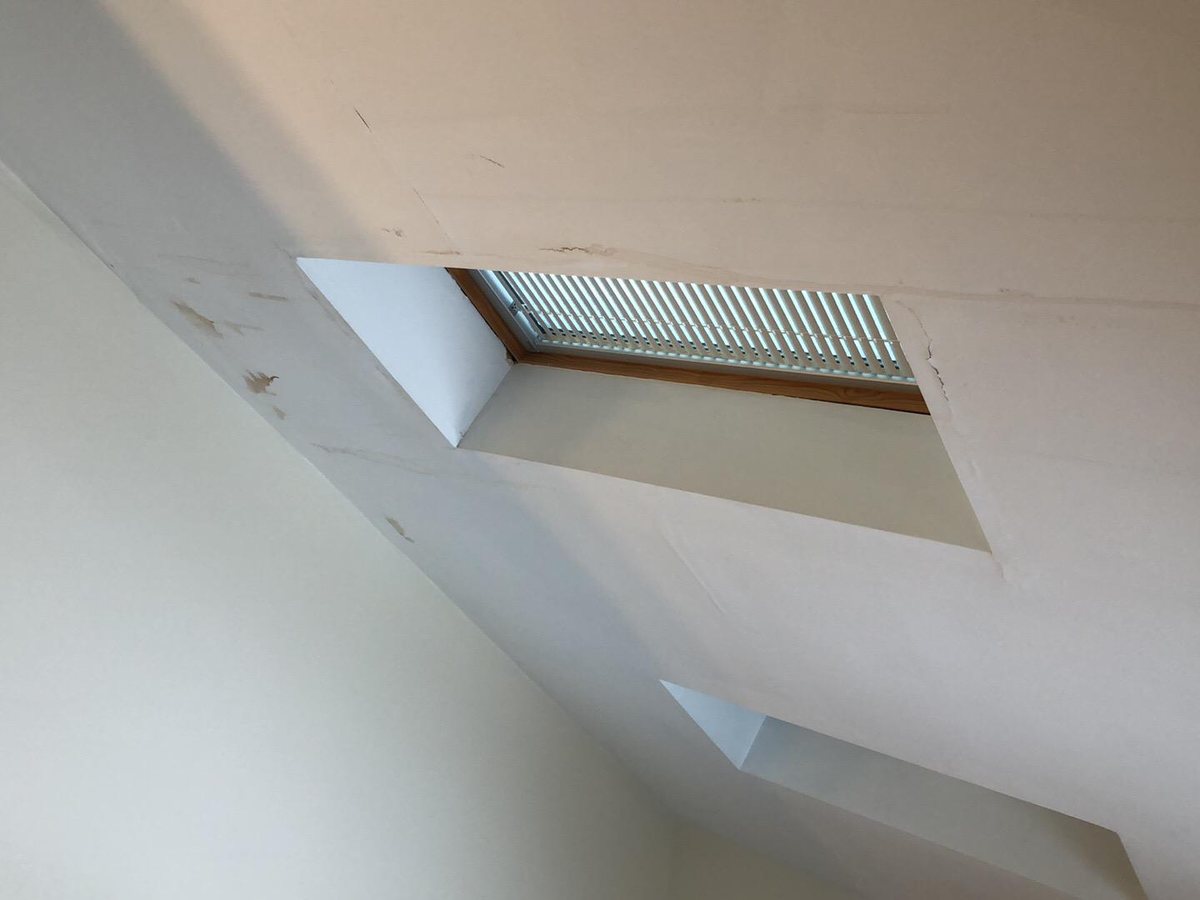
Stain getting bigger? That means the leak is still active.
Call 973-447-3363Ceiling leak questions we hear most
Is a water stain on the ceiling an emergency?
A dry brown ring is not an emergency, but it is a leak that will return. A ceiling that is wet, sagging, bubbling or dripping is urgent. Wet drywall is heavy and can fall, and the insulation above it is holding water. Stay out from under it and have it checked the same day.
Should I poke a hole in a sagging ceiling to drain it?
We would rather you did not. A bulge holds a lot of water and the drywall around it can let go when it is disturbed. Move people and belongings out from under it, put a bucket and a tarp down, shut off the water if it is plumbing, and call.
Does a wet ceiling always have to be torn out?
No. Drywall that got wet once from clean water and is still firm can sometimes be dried in place. Drywall that sagged, crumbled, or sat wet has to come out, and so does wet insulation above it. We decide with a moisture meter, not by how it looks from below.
Will mold grow above a ceiling after a leak?
It can, because the space above a ceiling has no air movement and the insulation stays wet for a long time. The EPA says water-damaged areas should be dried within 24 to 48 hours to prevent mold growth. That is why we open and dry the cavity instead of only repainting the stain.
Can I just paint over a water stain?
Only after the leak is fixed and the ceiling is confirmed dry. Stain-blocking primer hides the mark, but it does nothing about wet insulation or framing above it. If the stain comes back or grows, the source is still active. A moisture reading tells you before you spend money on paint.
My roof only leaks in heavy rain. Is that still water damage?
Yes. A leak that only shows in heavy or wind-driven rain is still wetting the roof decking and the attic insulation every time. Insulation holds that water against the ceiling, and it does not dry on its own. Have a roofer find the entry point and have the attic checked with a moisture meter.
Does PDQ repair roofs or remove ice dams?
No. PDQ is a restoration company. Roof repair, ice dam removal and plumbing repairs are done by the appropriate licensed trade. We handle the water inside the house: opening the ceiling safely, removing wet insulation, drying the framing, documenting the loss and rebuilding the ceiling afterward.
Water Coming Through the Ceiling? Call PDQ Restoration 24/7
We open the ceiling safely, remove wet insulation, dry the framing, document the loss and rebuild.
Call 973-447-3363Contact PDQ Restoration today if you live in Morristown, Sparta, Parsippany, Wayne, Montclair, Paramus, Hackensack, Clifton, or any surrounding New Jersey community.
4.98 out of 434 reviews

Other pages you may be interested in...