Flooded Basement Cleanup in Northern New Jersey
PDQ Restoration pumps out and extracts flooded basements 24 hours a day, removes what cannot be saved, disinfects, dries the structure and rebuilds the finished space. A PDQ employee answers every call. This is part of our water damage restoration service for Northern New Jersey.
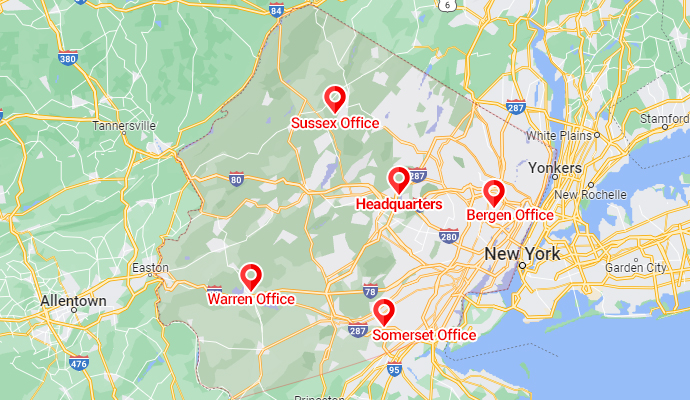
We clean up flooded basements across Morris County and the rest of Northern New Jersey, including Sussex, Passaic, Essex, Bergen, Union, Somerset and Warren counties.
Basement flooding right now? Stay out of the water if it has reached outlets or appliances, and call.
Call 973-447-3363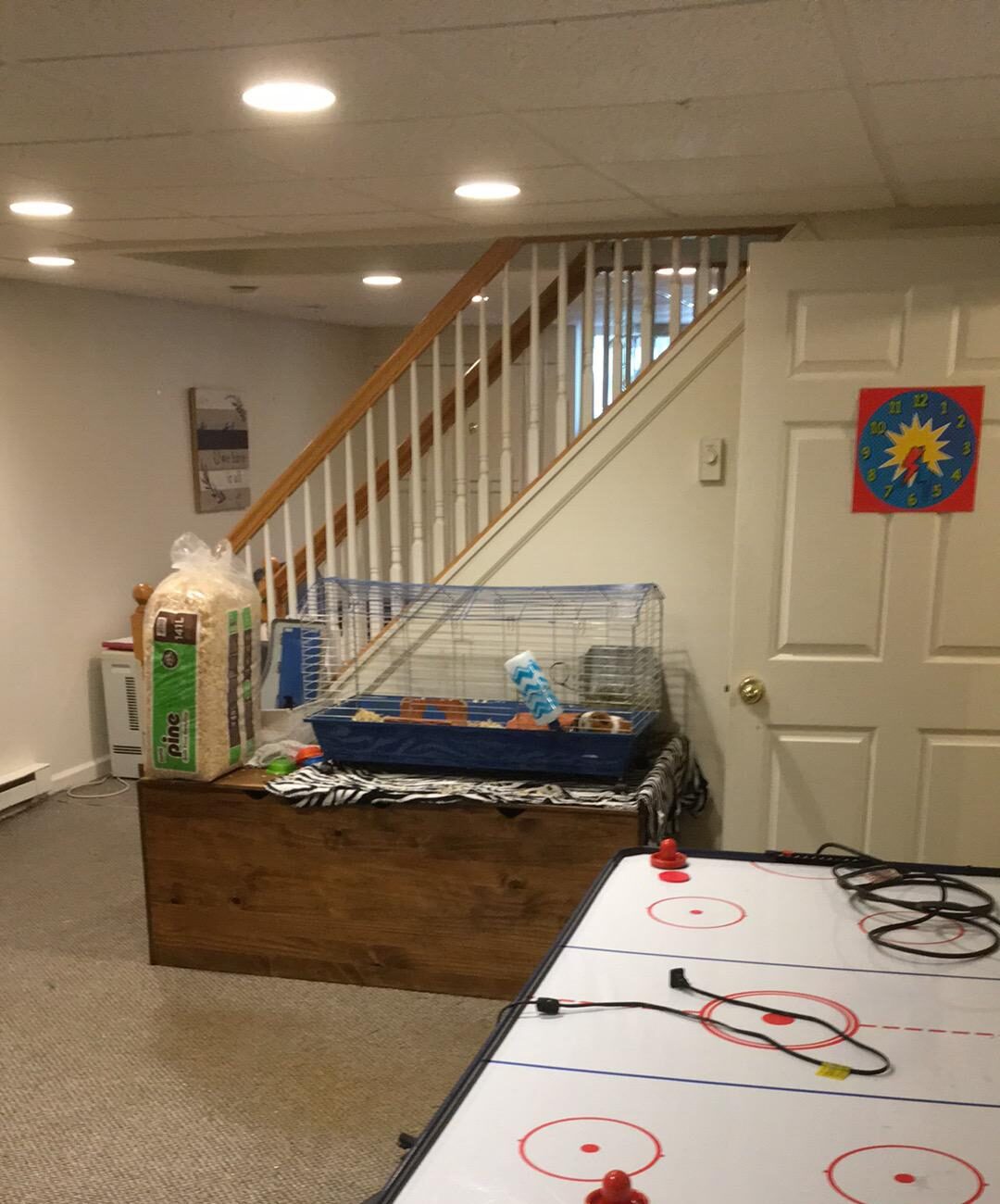
What should I do right now if my basement is flooded?
Stay out of the water, stop the source if you can do it safely, and call before you move anything. Do these 5 things now:
- Stay out of standing water if it has reached outlets, the panel or appliances.
- Stop the source if it is plumbing. Shut off the main water valve.
- Take photos and video from the stairs: the water line, the source and every room.
- Leave belongings where they are until they are photographed.
- Call PDQ at 973-447-3363. Report the claim with us, not before us.
Why is my basement flooded?
Basement water comes from seven places, and the source decides how it is cleaned up and who pays. About 1 in 8 PDQ water damage jobs is groundwater or a sump pump.
Related pages: sump pump failure, burst and frozen pipes and sewage backups.
The basement water we see most is groundwater and surface water after rain. It comes in through hydrostatic pressure or through gaps in the concrete foundation. That is a basement waterproofing problem, and not always a water damage claim. From inside the house, the most common sources are a burst water heater, a burst pipe, a radiator or the boiler.
Is a flooded basement covered by homeowners insurance?
It depends on where the water came from. Water from inside the house is usually a claim. Water from the ground usually is not. We cannot promise what your carrier will cover. This is how these losses usually go:
On a covered loss we bill your insurance company directly and you pay your deductible. See water damage insurance claims.
How much does flooded basement cleanup cost?
The two biggest factors are whether the basement is finished and whether the water is clean or from the ground. Self-pay pricing starts from Xactimate, the pricing system insurance companies use, and is then adjusted for the homeowner. We do not quote a flat rate. See water damage restoration cost in NJ.
| Unfinished basement | Finished basement | |
|---|---|---|
| What gets wet | Concrete, framing, stored items | Carpet, pad, drywall, insulation, trim, furniture |
| What is removed | Little, unless it is groundwater | Pad, wet drywall and trim, sometimes flooring |
| Drying | Faster | Slower, with more equipment |
| Rebuild after | Usually none | Drywall, flooring, trim and paint |
How does PDQ clean up a flooded basement?
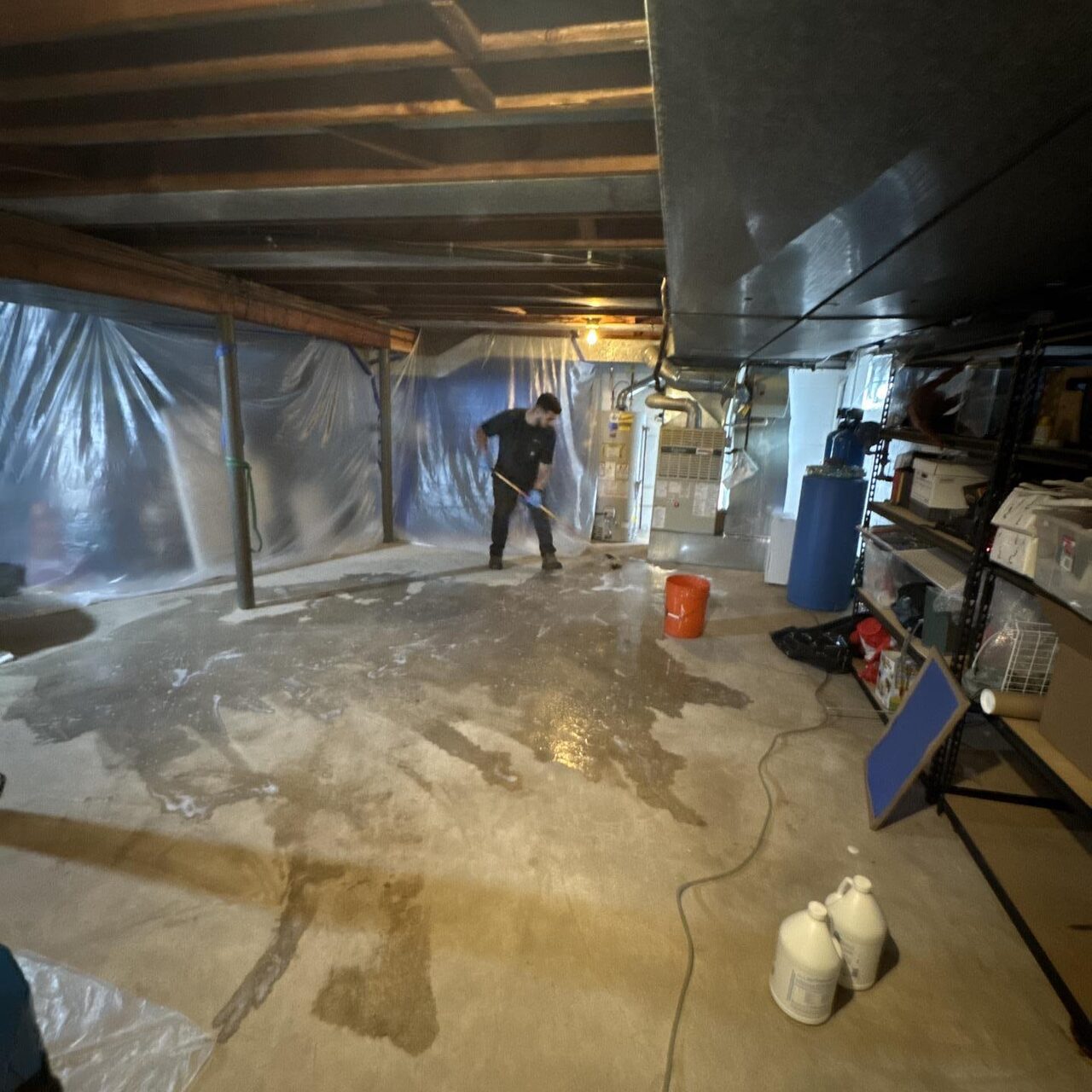
Water out first, then damaged materials, then cleaning, then drying.
- Safety check. Electricity, gas appliances and the stairs.
- Pump out and extract. Standing water is removed the same day.
- Remove what cannot be saved. Pad, wet drywall, insulation and trim.
- Clean and disinfect the slab and framing when the water is from the ground or a drain.
- Dry and monitor. Air movers and dehumidifiers, with readings every day.
- Rebuild the finished space on the approved scope.
A real flooded basement job from our files
Burst water heater in a half-finished basement
A water heater burst in a utility closet and flooded the left half of the basement. The water then seeped under the finished side, came up under the carpet and wet the sheetrock, which needed a flood cut.
- Source: water heater
- Half the basement finished
- Flood cut needed
Recent PDQ basement jobs:
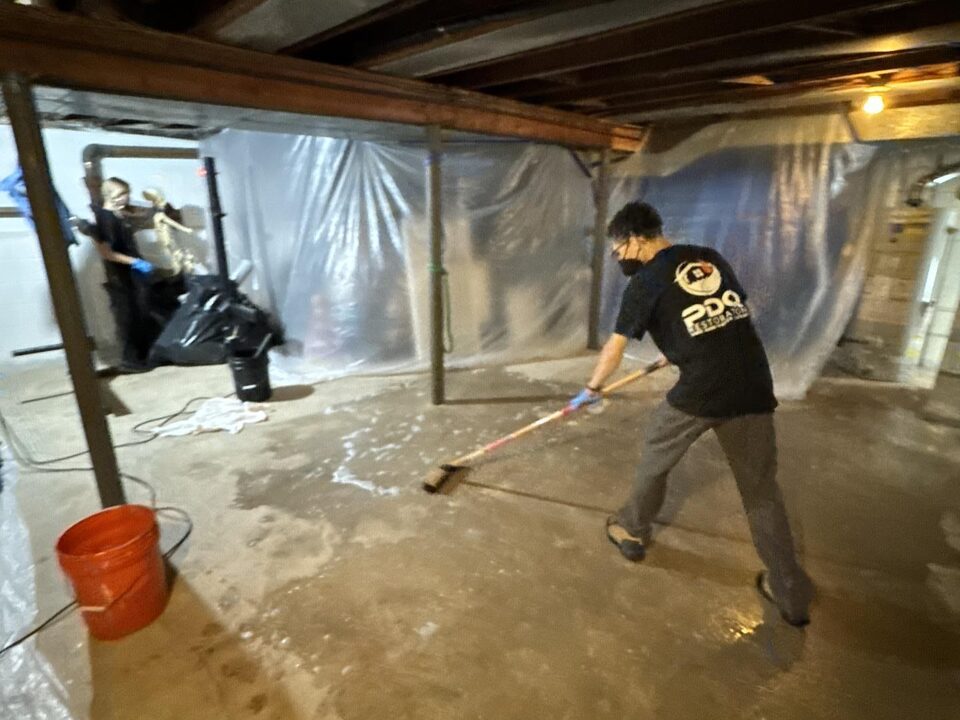
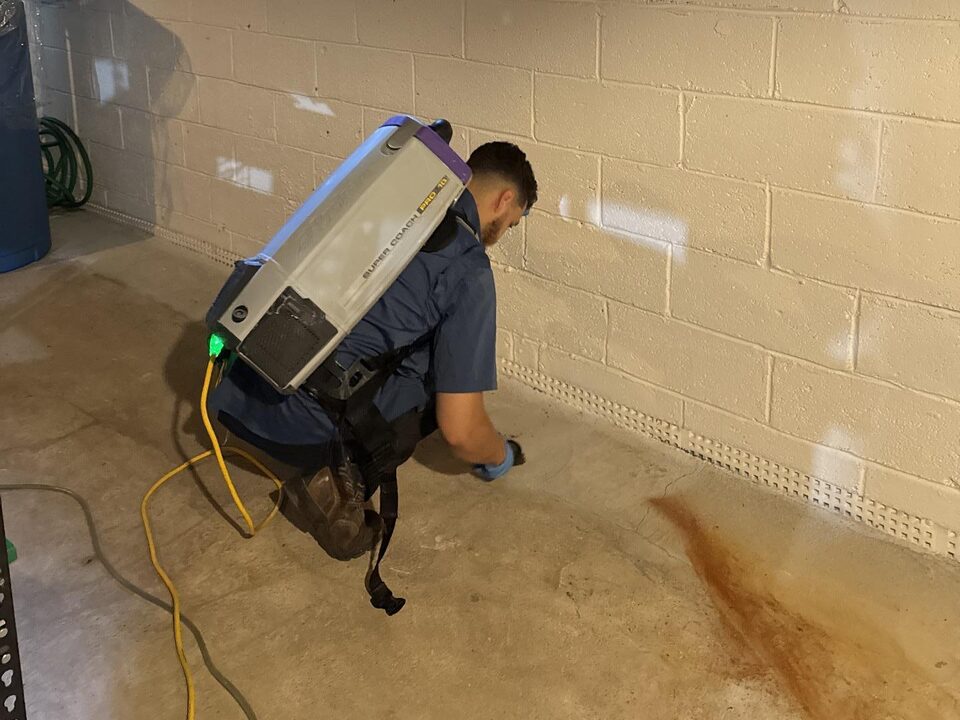
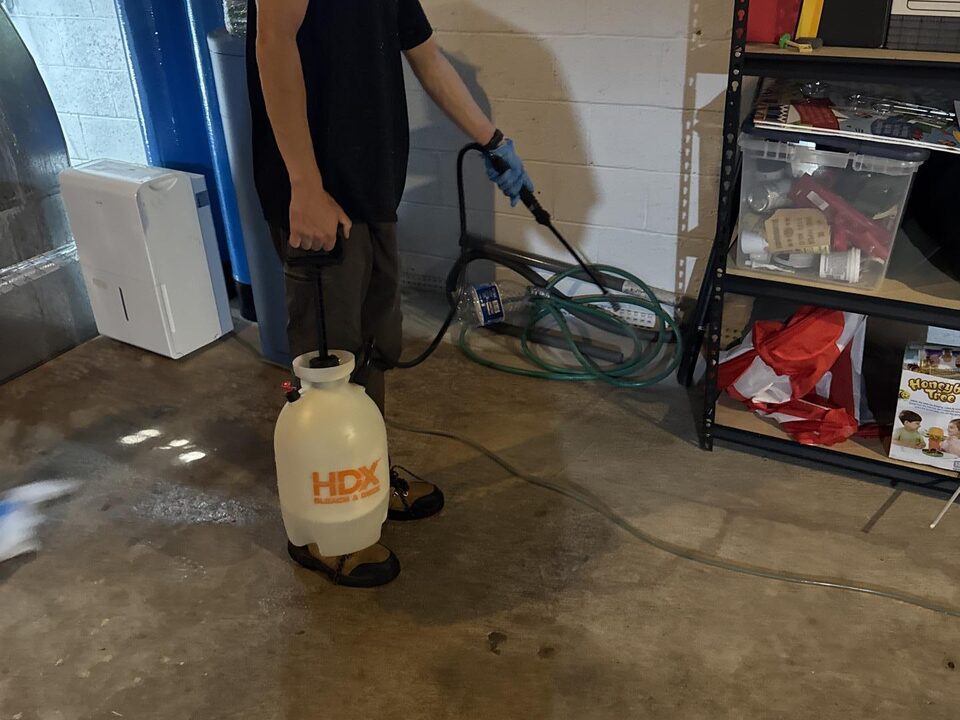
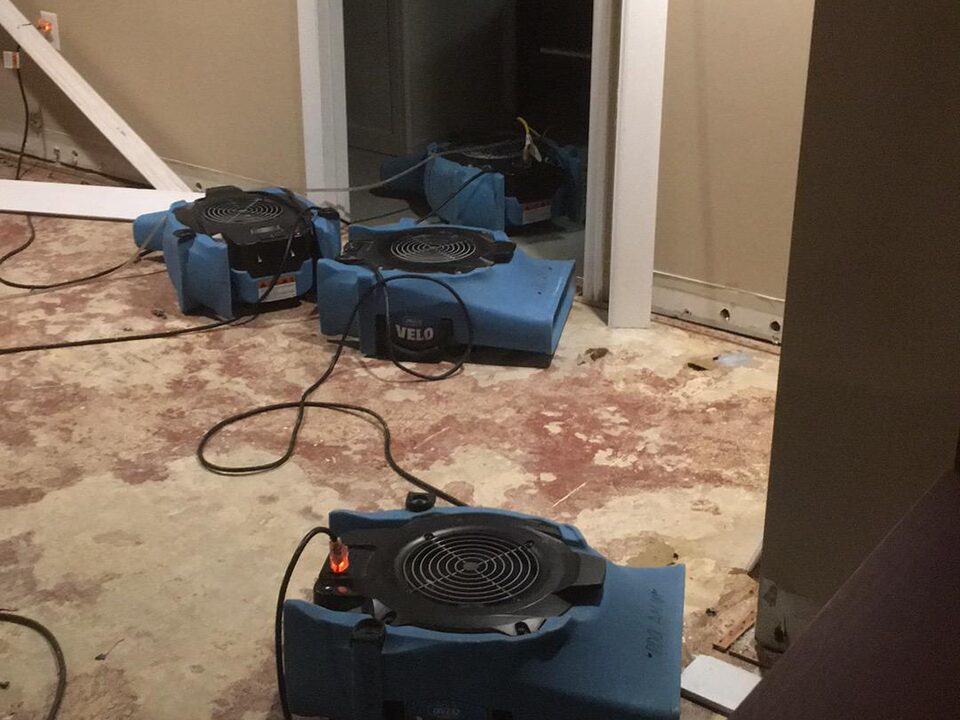
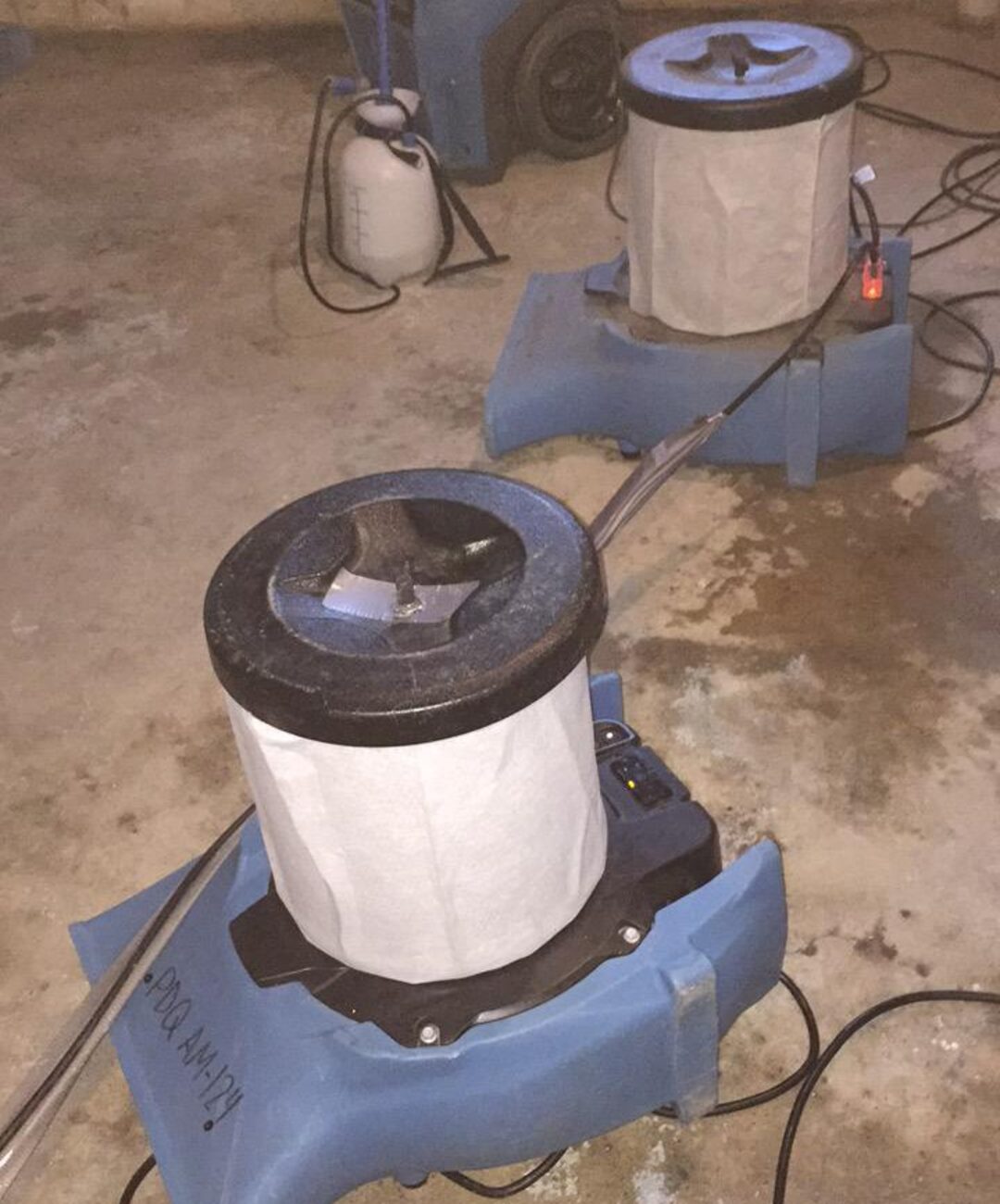
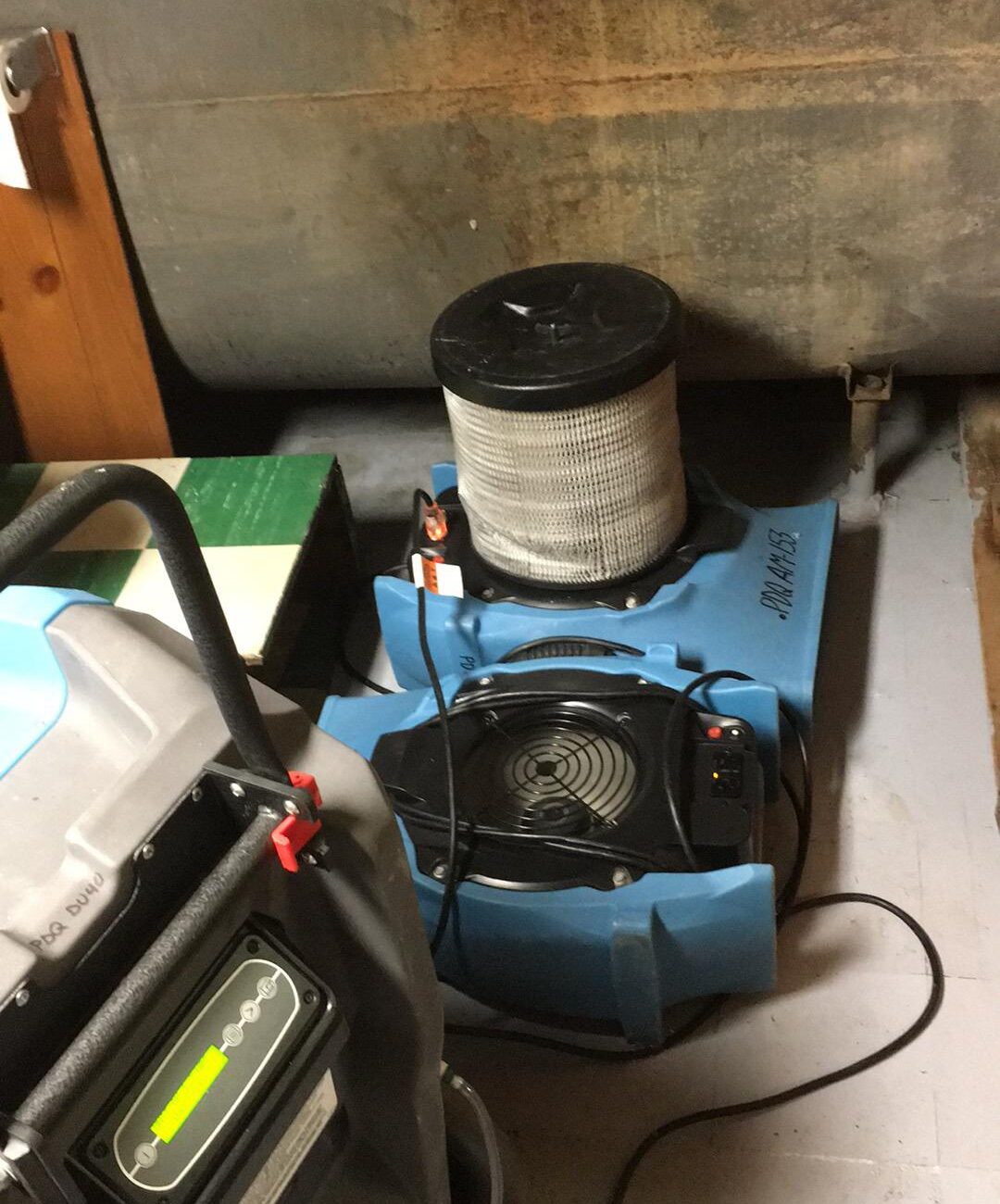
The biggest mistake on day one is not identifying where the water came from, especially when you are not sure if it is a burst pipe or groundwater. If it is groundwater, it will keep happening until the basement is waterproofed. Confirming the source is the most important step.
Finished basement under water? The sooner wet materials come out, the less there is to rebuild.
Call 973-447-3363Flooded basement questions we hear most
Is it safe to go into a flooded basement?
Not if the water has reached outlets, the electrical panel, the furnace or appliances. Do not walk into standing water to reach the breaker panel. If you smell gas, leave the house and call the gas company. When in doubt, stay upstairs and call. We check that it is safe before anyone goes in.
How fast does mold grow in a flooded basement?
Quickly. The EPA says water-damaged areas should be dried within 24 to 48 hours to prevent mold growth. Basements are slower to dry than the rest of the house because they are cool and have little air movement, so the extraction and equipment need to start the same day.
Does wet drywall in a basement have to be replaced?
Often the bottom section does. Drywall wicks water up above the water line, and the insulation behind it holds water against the framing. We cut it out above the wet area so the wall cavity can dry. With groundwater or sewage, anything porous that got wet is removed.
Can I stay in my house while the basement dries?
Usually, yes. The drying equipment stays in the basement and runs around the clock. It is loud and warm near the stairs, and the basement is off limits while it runs. If the furnace, water heater or electrical panel was affected, tell us, because that changes what is safe.
Why does my basement still smell after it dried?
Because something is still wet, or because contaminated material was left in place. Carpet pad, the bottom of the drywall, the wall framing and stored boxes are the usual sources. A moisture meter finds wet materials in a minute. A smell that returns in humid weather is a sign to have it checked.
Does PDQ waterproof basements?
No. We are a restoration company. We remove the water, take out damaged materials, clean, disinfect, dry and rebuild the finished space. Waterproofing, grading, gutters and sump pump replacement are done by the appropriate trade. We can tell you what we saw so you know what to ask them to fix.
Flooded Basement? Call PDQ Restoration 24/7
We pump out the water, remove what is ruined, disinfect, dry the basement and rebuild the finished space.
Call 973-447-3363Contact PDQ Restoration today if you live in Morristown, Sparta, Parsippany, Wayne, Montclair, Paramus, Hackensack, Clifton, or any surrounding New Jersey community.