Common Causes of Basement Water Damage in Late Summer
Late summer in New Jersey often brings heavy rain, thunderstorms, and saturated ground conditions that can increase the risk of basement water damage. While homeowners may expect flooding after a major storm, many basement water problems are actually caused by gradual water intrusion, poor drainage, or hidden plumbing issues that worsen over time.
Because basements are below ground level, they are especially vulnerable to water entering through foundations, windows, drains, and plumbing systems. If left untreated, even a small amount of water can damage flooring, drywall, insulation, and personal belongings while creating conditions for mold growth.
Without prompt mitigation, property owners risk:
- Flooded basements and damaged belongings
- Mold growth from trapped moisture
- Structural damage to walls and flooring
- Poor indoor air quality and persistent odors
- Damage to electrical systems and mechanical equipment
- Costly restoration and reconstruction projects
Understanding the most common causes of basement water damage can help homeowners protect their property before problems become more severe.
Why Basement Water Damage Increases in Late Summer
Late summer weather creates several conditions that contribute to water intrusion.
These include:
- Frequent thunderstorms producing heavy rainfall
- Saturated soil surrounding the home's foundation
- High humidity levels that increase condensation
- Tropical storm systems bringing prolonged rain
- Aging drainage systems struggling to handle excess water
When water cannot drain away from the home efficiently, it often finds its way into the basement.
Common Causes of Basement Water Damage
Several issues can contribute to basement flooding or moisture intrusion during late summer.
Foundation Cracks
As soil expands and contracts with changing moisture levels, small cracks can develop in foundation walls or floors. Heavy rainfall allows groundwater to seep through these openings.
Poor Exterior Drainage
Improper grading, clogged gutters, or short downspouts can direct rainwater toward the home's foundation instead of away from it.
Window Well Leaks
Basement window wells can quickly fill with water during heavy storms if drains become clogged or the wells are not properly maintained.
Sump Pump Failure
A sump pump is designed to remove groundwater before it enters the basement. Mechanical failure, power outages, or inadequate pump capacity can result in flooding during severe weather.
Plumbing Leaks
Water supply lines, water heaters, and basement plumbing fixtures can develop leaks that saturate flooring and surrounding materials.
HVAC Condensation
Air conditioning systems produce condensation that must drain properly. Blocked condensate lines can contribute to unexpected basement moisture.
Warning Signs of Hidden Basement Moisture
Water damage is not always immediately visible.
Homeowners should watch for:
- Damp or musty odors
- Water stains on walls or flooring
- Peeling paint or bubbling drywall
- White mineral deposits on foundation walls
- Warped flooring
- Increased indoor humidity
- Visible mold growth
Recognizing these warning signs early can help prevent more extensive damage.
Real-World Example: Water Damage Caused by a Hidden Plumbing Leak
Brian T. contacted PDQ Fire & Water Damage Restoration after discovering water damage spreading from a bathroom into the hallway of his Mendham, NJ home. A slow leak from a faulty bathroom supply line had allowed water to saturate the carpet, padding, and surrounding structural materials over time.
Although the leak did not originate in the basement, the restoration process demonstrates how hidden water intrusion can affect any area of a home when moisture is left undetected.
Using thermal imaging cameras and moisture meters, PDQ technicians identified elevated moisture levels beneath the carpet, along the baseboards, and inside wall cavities. Immediate water extraction was followed by the removal of saturated carpet padding, targeted structural drying, commercial dehumidification, and antimicrobial treatment to help prevent mold growth.
Throughout the project, technicians monitored moisture levels daily to ensure all affected materials were thoroughly dried before reconstruction. Detailed moisture logs and drying documentation were also provided to support the homeowner's insurance claim.
This project highlights the importance of addressing hidden water intrusion quickly. Whether caused by a plumbing leak or basement flooding after a storm, professional moisture detection and structural drying are essential to preventing long-term damage.
How Professionals Restore Basement Water Damage
Professional restoration goes beyond simply removing standing water.
The restoration process typically includes:
Water Extraction
Powerful extraction equipment removes standing water quickly to reduce additional damage.
Moisture Inspection
Moisture meters and thermal imaging cameras identify hidden water inside walls, flooring, and structural components.
Structural Drying
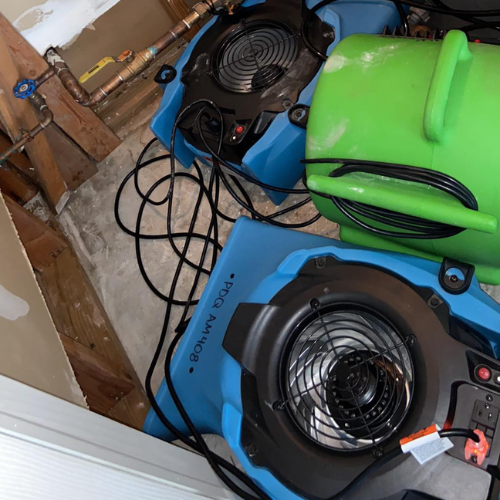
Commercial air movers and dehumidifiers remove trapped moisture from building materials.
Antimicrobial Treatment
Affected areas are treated to reduce the risk of mold growth and bacterial contamination.
Moisture Monitoring
Daily moisture readings verify that all materials reach acceptable drying levels before repairs begin.
This systematic approach helps restore the property safely and efficiently.
Preventing Basement Water Damage
Homeowners can reduce the risk of basement flooding by performing regular maintenance.
Helpful preventive measures include:
- Clean gutters and downspouts regularly.
- Extend downspouts away from the foundation.
- Inspect foundation walls for cracks.
- Test sump pumps before storm season.
- Keep basement drains clear.
- Repair plumbing leaks promptly.
- Maintain proper grading around the home.
- Monitor indoor humidity levels.
Routine maintenance can significantly reduce the likelihood of water intrusion during late summer storms.
Why Immediate Response Matters
Water damage can worsen rapidly if left untreated.
Professional mitigation helps:
- Prevent mold growth
- Protect structural materials
- Preserve flooring and finished spaces
- Improve indoor air quality
- Reduce restoration costs
- Support insurance claims with proper documentation
The sooner water damage is addressed, the greater the opportunity to minimize long-term damage.
Call the Experts for Basement Water Damage Restoration
If your basement has experienced flooding, seepage, or hidden moisture, prompt professional restoration can help prevent costly repairs and protect your property.
PDQ Restoration's licensed, IICRC-certified team provides emergency water extraction, moisture detection, structural drying, antimicrobial treatments, and complete basement water damage restoration services. Using advanced equipment and proven restoration techniques, we restore homes safely, efficiently, and according to industry standards.
Contact PDQ Restoration today for professional basement water damage restoration services you can trust.