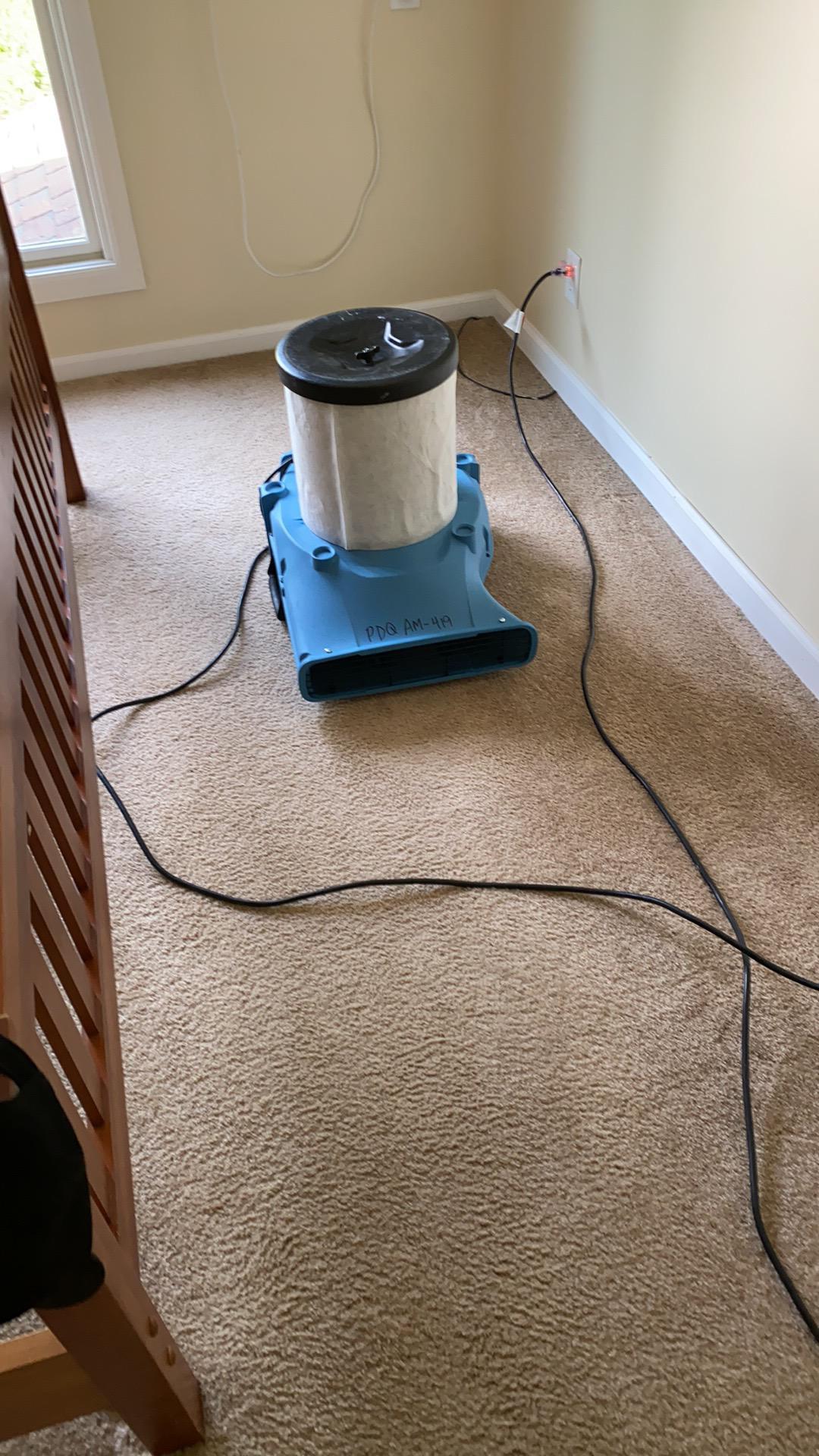
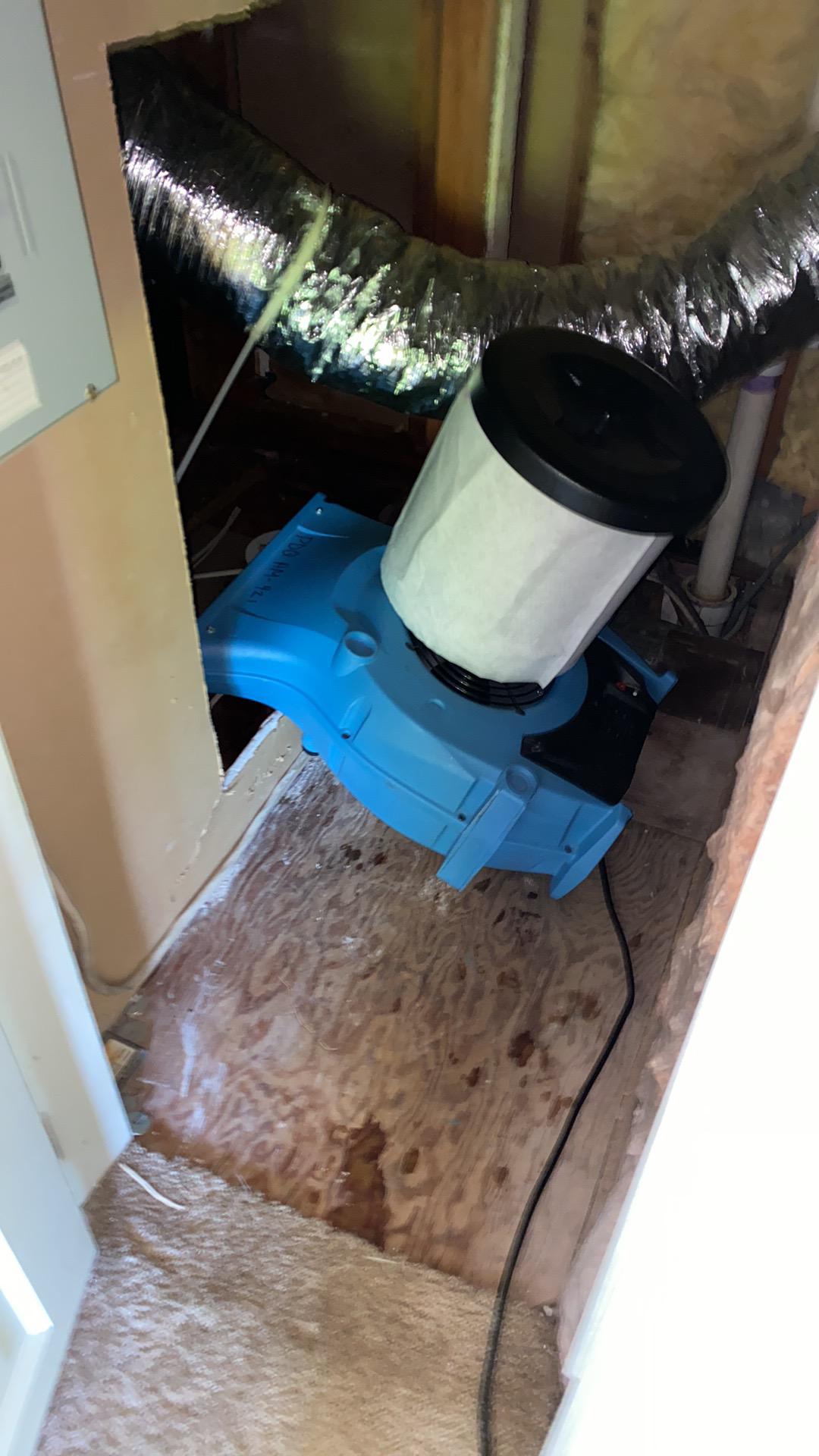
David P. contacted PDQ after discovering elevated moisture levels and possible mold contamination in a bedroom of his home in Lake Hopatcong, NJ. The mold issue in Lake Hopatcong, NJ developed after a small plumbing leak inside the wall allowed moisture to soak into the carpet padding and surrounding building materials. During the mold inspection in Lake Hopatcong, NJ, technicians identified damp carpet, elevated humidity levels, and conditions favorable for microbial growth. Air filtration equipment with HEPA filtration was installed to begin removing airborne mold spores while Mold Inspections & Remediation procedures were prepared for the affected room in Lake Hopatcong, NJ. The mold remediation project in Lake Hopatcong, NJ required containment of the affected bedroom and the use of negative air machines to prevent mold spores from spreading to other areas of the home. Technicians also documented the mold conditions in Lake Hopatcong, NJ to assist with moisture tracking and remediation planning.
The mold remediation process in Lake Hopatcong, NJ included HEPA vacuuming, antimicrobial treatment, and detailed cleaning of affected surfaces to remove mold spores and microbial contamination. Moisture meters and infrared inspection tools were used throughout the mold cleanup in Lake Hopatcong, NJ to confirm that hidden moisture within the carpet and wall materials had been properly addressed. Because the mold growth in Lake Hopatcong, NJ resulted from a plumbing leak that caused prolonged moisture exposure, portions of the remediation work were eligible for insurance coverage. Technicians continued operating air scrubbers and drying equipment to stabilize humidity levels and improve indoor air quality throughout the remediation process in Lake Hopatcong, NJ. Final Mold Inspections, Testing & Estimates were completed to confirm that mold spore counts and moisture levels had returned to normal conditions inside the Lake Hopatcong, NJ home. The completed mold remediation project in Lake Hopatcong, NJ restored safe indoor air conditions and eliminated the environmental factors that had allowed the mold contamination to develop.