Here Are the Key Stages That Determine Water Damage Drying Time
1. Initial Water Extraction (Day 0–1)
The drying process begins with emergency water extraction to remove standing water as quickly as possible. High-powered pumps and industrial vacuums are used to eliminate large volumes of water from floors, carpets, and affected areas. Fast extraction significantly reduces overall drying time and prevents further saturation of building materials. The sooner water removal begins, the less damage occurs to drywall, insulation, and wood structures.
2. Moisture Mapping and Inspection
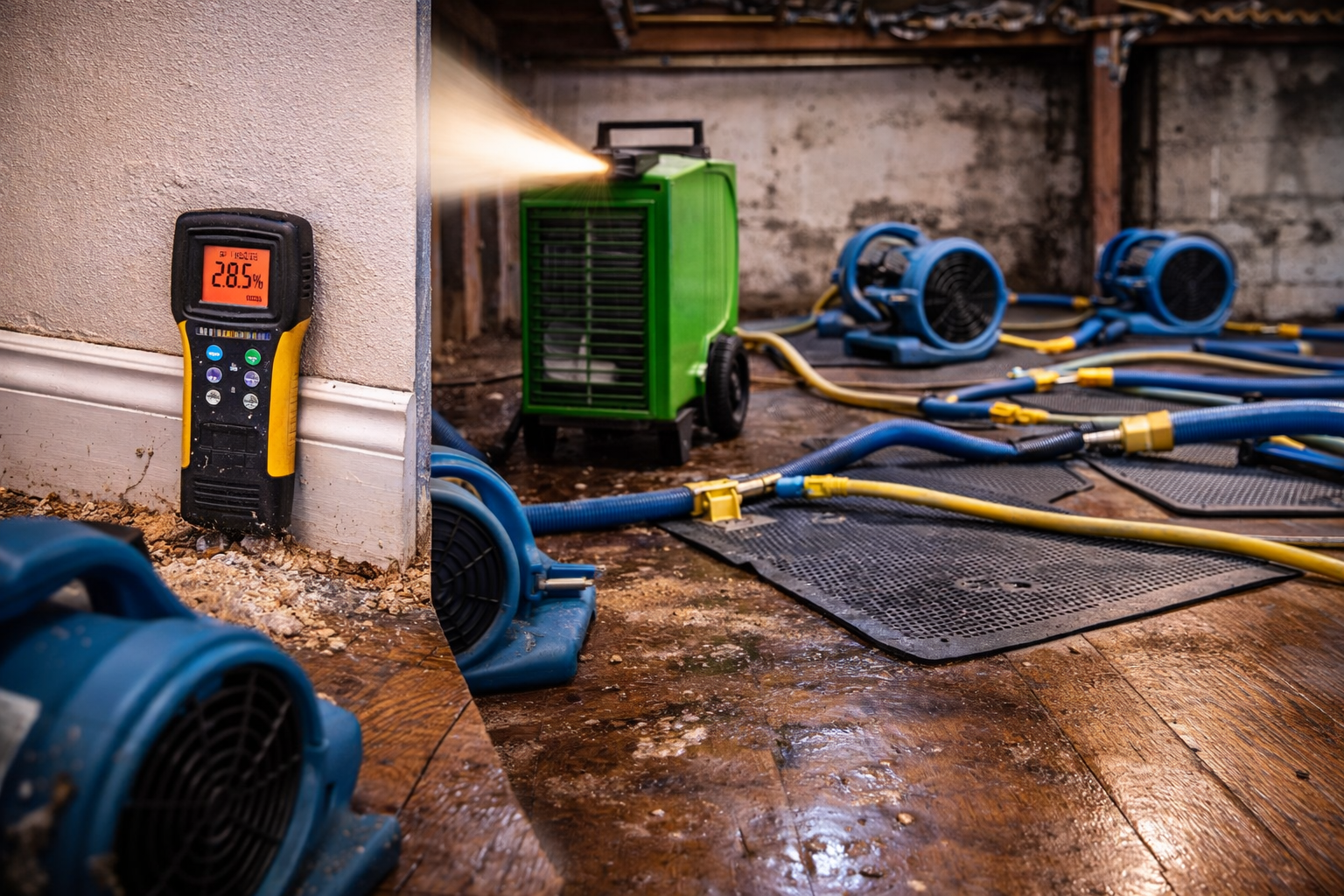
Technicians perform a detailed inspection using moisture meters and thermal imaging cameras to locate hidden moisture behind walls, under flooring, and inside structural cavities. This step ensures that all affected areas are identified, not just visible damage. Accurate moisture mapping is essential for creating an effective drying plan and avoiding missed areas that could lead to mold growth or secondary damage.
3. Structural Drying and Air Movement (Day 1–3)
Air movers and professional drying equipment are strategically placed to promote evaporation and airflow across wet surfaces. This phase targets materials like drywall, baseboards, and subflooring, which can retain moisture even after extraction. Consistent air circulation speeds up evaporation and helps stabilize the indoor environment. During this stage, temperature and humidity levels are carefully controlled to optimize drying conditions.
4. Dehumidification Process (Day 2–5)
Commercial-grade dehumidifiers are used to remove moisture from the air, preventing it from being reabsorbed into building materials. This step is critical for complete structure drying, especially in enclosed areas like basements or wall cavities. Proper dehumidification ensures that moisture levels return to normal and reduces the risk of mold development. Larger or more severe water damage jobs may require extended dehumidification time.
5. Material-Specific Drying Times
Different materials dry at different rates, which directly affects the overall timeline. Drywall and insulation may take several days to dry or may require removal if heavily saturated. Hardwood floors can take longer due to moisture absorption beneath the surface, sometimes requiring specialized drying mats. Carpet and padding may dry quickly with extraction but often need removal depending on contamination levels, especially in sewage situations.
6. Monitoring and Moisture Readings
Throughout the drying process, technicians monitor progress using moisture readings and drying logs. Equipment is adjusted daily based on these readings to ensure efficient drying. This ongoing monitoring confirms that all materials reach acceptable moisture levels and prevents premature removal of equipment. Proper documentation also supports insurance claims related to water damage restoration.
7. Factors That Affect Drying Time
Several variables influence how long water damage takes to dry, including the category of water (clean, gray, or black), the extent of saturation, airflow availability, and environmental conditions. Hidden moisture, poor ventilation, and delayed response can significantly extend drying time. In general, most standard water damage drying projects take 3 to 5 days, but severe cases can take longer depending on structural impact.
8. When Mold Becomes a Concern
If water damage is not properly dried within 24–48 hours, mold growth can begin to develop. This adds additional steps such as mold remediation, containment, and antimicrobial treatment, which can extend the restoration timeline. Proper and timely drying is the most effective way to prevent mold and avoid more extensive repairs.
Water damage drying is a controlled, multi-step process that depends on rapid response, proper equipment, and continuous monitoring. From water extraction to dehumidification and final moisture verification, each stage plays a role in restoring a property efficiently and preventing long-term damage.