The Complete Water Damage Restoration Process Explained
Breaks down each phase of restoration, including water extraction, moisture detection, structural drying, dehumidification, and repairs. Helps property owners understand what to expect during professional cleanup and insurance claims.
Water damage restoration is a multi-step process designed to remove water, dry affected materials, and restore a property to its pre-loss condition. Whether caused by a burst pipe, appliance leak, flooding event, or roof failure, immediate and professional response is essential to prevent further structural damage and mold growth. Water can quickly penetrate porous materials like drywall, insulation, and wood flooring, making thorough drying critical. Professional restoration teams follow industry-standard procedures to ensure all moisture is properly addressed. Understanding each phase of the process helps property owners know what to expect and how the restoration progresses.
Step-by-Step Breakdown of the Restoration Process
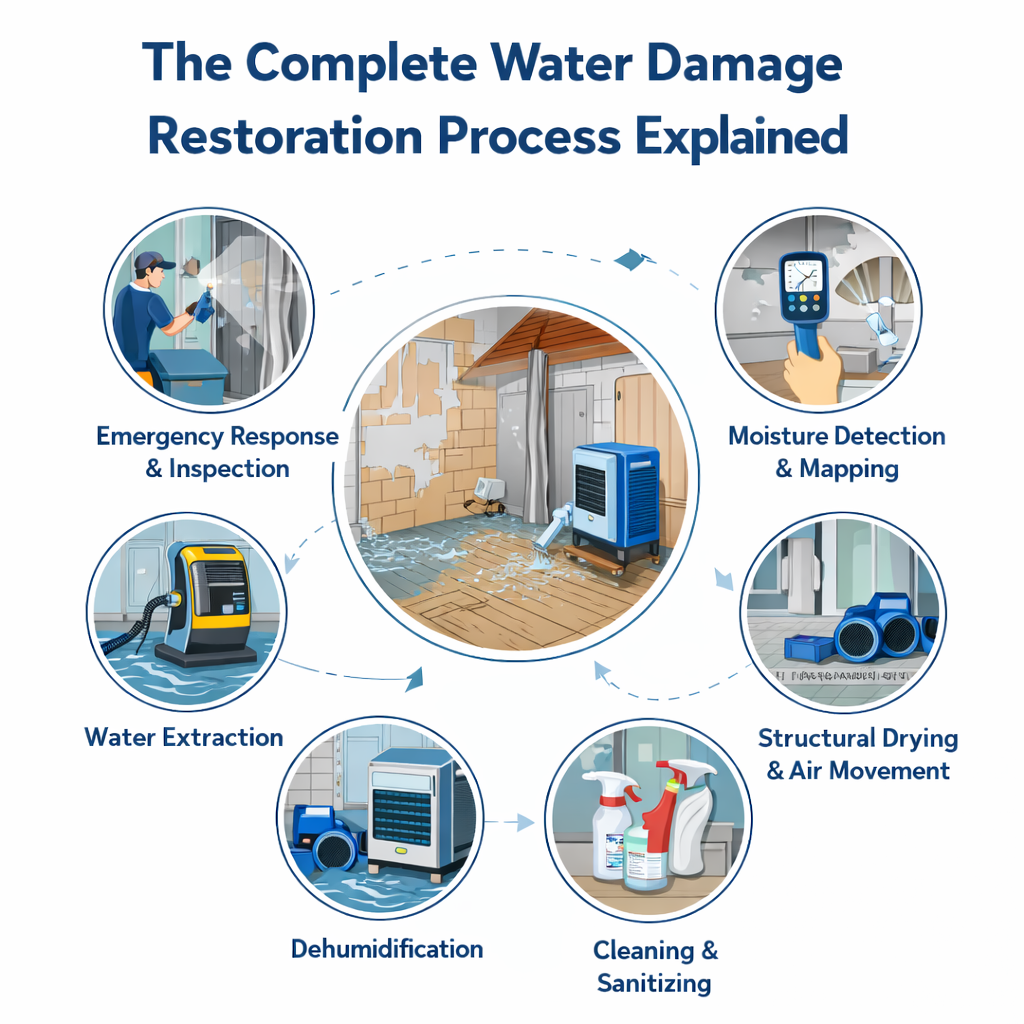
1. Emergency Response and Inspection
Technicians assess the extent of water damage, identify the source, and determine the category of water contamination. This initial evaluation guides the entire restoration plan.
2. Water Extraction
High-powered pumps and vacuums are used to remove standing water quickly. Fast water extraction reduces saturation and prevents further damage to floors and structures.
3. Moisture Detection and Mapping
Specialized equipment like moisture meters and infrared cameras detect hidden water behind walls, ceilings, and flooring. This ensures no moisture is overlooked.
4. Structural Drying and Air Movement
Industrial air movers are strategically placed to promote evaporation. This step targets wet building materials such as drywall, subfloors, and framing.
5. Dehumidification
Commercial dehumidifiers remove moisture from the air, preventing condensation and secondary damage like mold growth or material warping.
6. Cleaning and Sanitizing
Affected surfaces are cleaned and treated with antimicrobial solutions to eliminate bacteria, odors, and contaminants.
7. Repairs and Restoration
The final phase includes repairing or replacing damaged materials such as drywall, flooring, and insulation, restoring the property to its original condition.
What to Expect During the Process
The timeline for water damage restoration varies depending on the severity of the damage and how quickly mitigation begins. Most projects take several days for drying, followed by additional time for repairs if needed. Insurance claims are often part of the process, and proper documentation—such as photos, moisture readings, and detailed reports—helps streamline approvals. By understanding each step, property owners can feel more confident and prepared throughout the restoration process.